
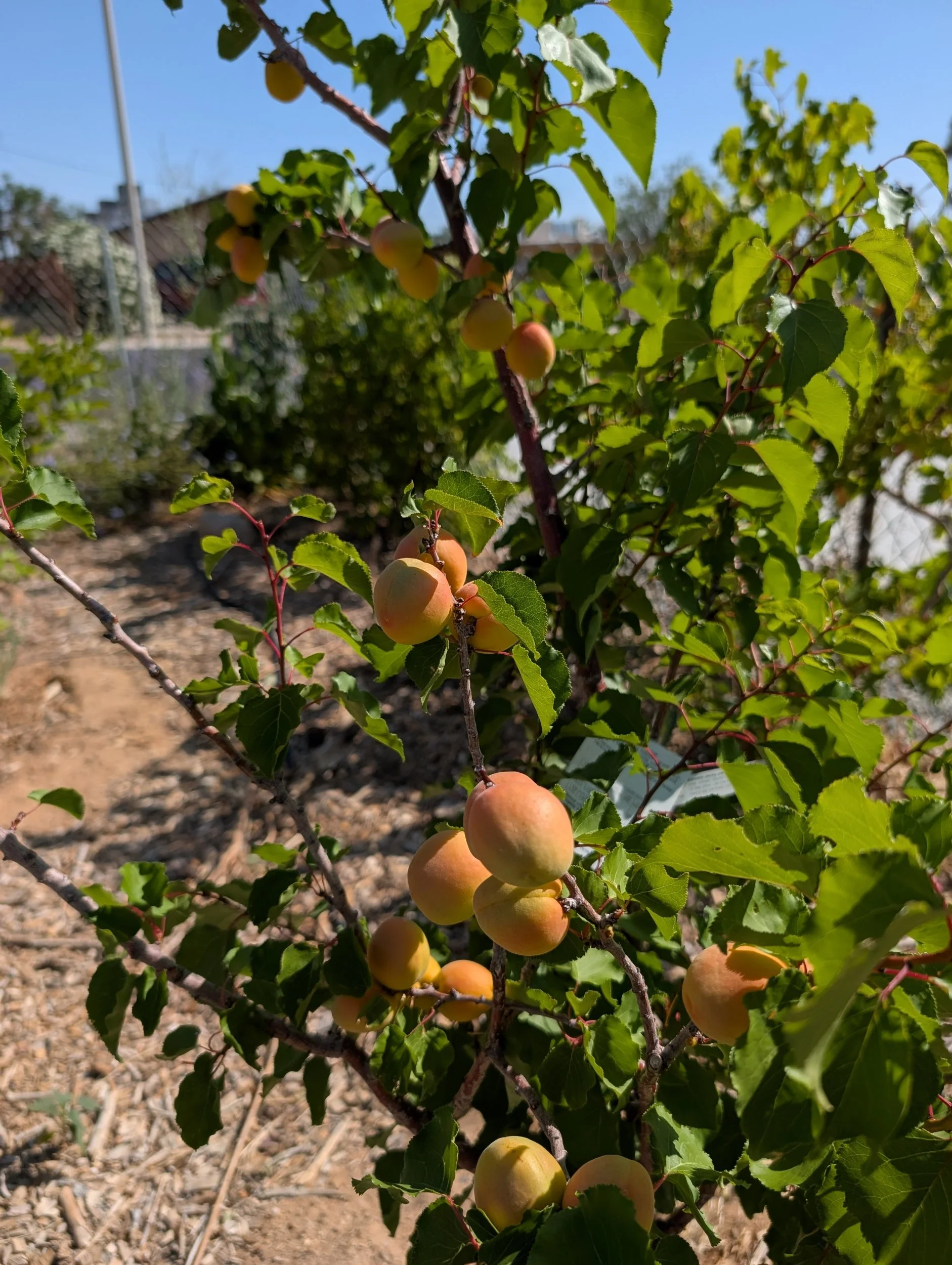
Growing your own delicious stone fruit, apples, or citrus in the desert is entirely possible, but success hinges on two key factors: selecting varieties with a low "chill hour" requirement and, most importantly, timing your planting perfectly.
The best time to plant depends on whether your tree is deciduous (loses leaves in winter) or evergreen (keeps leaves year-round).
Deciduous Fruit Trees (Apples, Pears, Peaches, Apricots)
For deciduous fruit trees, you have two great options depending on what you purchase.
Bare-Root Trees: These are typically bought in winter while they are dormant. They are cheaper and establish roots quickly. The best time to plant bare-root trees is in Late January to Mid-February. This timing ensures the tree has several weeks to settle its roots into the warming soil before it begins to bud, sprout leaves, and face the stressful spring winds.
Container Trees: If you purchase a container-grown deciduous tree, planting in the fall (October/November) is an excellent alternative to bare-root planting, as it allows the roots the benefit of the cool season to establish.
Evergreen Fruit Trees (Citrus, Olives, Figs)
Evergreen varieties, particularly citrus, are sensitive to cold and need to be planted when the danger of frost is gone and the soil is consistently warm.
The optimal planting window for evergreens is either Early Spring (March/April) or Early Fall (September/October).
Planting citrus in the spring gives them the entire long, warm growing season to establish themselves before the winter. Alternatively, planting in the early fall is a great choice, allowing the roots to grow steadily throughout the entire mild desert winter. Be sure to avoid planting these heat-sensitive trees during the summer's peak heat (June through August), as this is a period of intense stress and high water demand that can lead to failure.