Creating Self-Sustainability in Your Home

Upon purchasing my home in 2019, my goal was to turn my home in to a sanctuary filled with many different species of plants to serve as a place of relaxation. I knew this would be very challenging because I was moving my wife, and kids to the desert where individuals have difficulty growing plants. I started off by buying and building two greenhouses. One greenhouse serves as a house for my organic cannabis plants, and the second greenhouse houses my starter plants, and different plants depending on what time of the year it is. I have been pretty successful with growing plants, and harvesting them. I have also had some failures from simple mistakes I’ve made during the winter season. All in all, the whole family have been involved in turning our yard in to a mini agricultural farm, and a sanctuary for plants.

Along with my two greenhouses, I built 6 raised beds using bricks. I filled them with a mixture of organic soil, native soil, and compost. Having 6 raised beds, and two greenhouses gives me endless opportunities to grow many fruits, vegetables, and herbs. I have well over 50 plants and seedlings that are growing in both our greenhouses, and raised beds. They are flourishing, and I am always sowing new seeds. I organize my beds by what grow well together, and I am prepping new areas in my yard for planting. I have a wide range of plants in my yard. Here are the different variety of plants I have to show how you can create self-sustainability in your yard.

Oregano, marjoram, mint, chocolate mint, spearmint, peppermint, sweet mint, sage, rosemary, chamomile, aloe vera, lavender, Spanish lavender, cannabis, parsley, cilantro, purple basil, curly kale, dinosaur kale, swiss chard, arugula, purple tomatoes, strawberries, goji berries, blueberries, watermelons, cucumbers, yellow peppers, jalapeños, lemon tree, lime tree, strawberry guava tree, plum tree, pear tree, almond tree, cherry tree, and more than what I can think of at this current moment.

My goal is to show and teach individuals how to utilize what they have to grow fruits, vegetables, and herbs. Plants can be used as food and medicine. It is important that we learn how to tap in to all that plants have to offer. Plants can be used as a tool to help us deal with our mental health, and overall health.

Plant Spirit Medicine Woman: A Story on Herbalism

If you want to know my story with herbalism, then you need to know it all, and that includes the ugly parts. Like waking up in a psychiatric ward - by far my rockbottom of bottoms. I didn’t understand the meaning of self-care back then. For far too long, I was living outside my body, completely dissociated from reality and ignoring all the signs that I was sick. I was working myself to death at very high-stress job, and numbing my pain at home with drugs and alcohol to cope. I was completely out of control and I couldn’t handle it anymore, so one night I tried to end my life. Thank God I was unsuccessful. But when I woke up in the psych ward the next morning, I couldn’t even believe this was my life now. I mean, this was some Girl Interrupted shit (see the movie if you don’t know what I’m referring to). Once I got over the anger of still being alive (and now being trapped in a hospital), I realized that it was actually a gift and embraced the surrender. My mind, body and soul were completely exhausted from doing life the old way; and unless I wanted to continue living in a place where I had to trade my yogurt cup with another patient just to get a second cup of coffee, then I needed to get my shit together and get healthy.

IMG_3641.JPG

Plants are magically resilient organisms with the power to regenerate and heal themselves. Even if they have been previously neglected (by being kept in darkness or starved of basic nutrients), they can completely restore homeostasis when given the proper care and medicine from NATURE. Surely, if something as delicate as a plant can heal itself with nature, then that means I could heal too. I needed some time, so my psychiatrist put me on medical leave for a few months. During that time, I dove deep into self-care, self-discovery and herbalism. When I wasn’t in outpatient care for my mental health, I was self-teaching about adaptogens, nervines, relaxants and nutritive herbs. I wasn’t allowed to take benzos anymore for anxiety (nor did I want to), so instead, I experimented with different teas and smoking blends of lavender, catnip, skullcap, linden, rose, and chamomile. And of course the occasional cannabis as well. Holy life-changer! I was hooked and needed to know more, so I joined The Herbal Academy and graduated in 2019 from their Intermediate Course! I highly recommend their beginner and intermediate courses for those who are interested in getting certified (not sponsored I just love their courses and recipes). 

These days I'm stable and although I do take a daily SNRI, I don’t take any additional medication for anxiety or sleep anymore… only plant allies. I am obsessed with making tinctures, elixirs and tonics and who knows what else I’ll make next. I’m slowly starting an herbal business, however sourcing the herbs is pretty difficult right now - I wish I grew my own!!! I hope that eventually I won’t need my daily pill anymore, but I am not willing to quit taking it just yet (at least not during this unpredictable health and financial pandemic). In addition to herbalism, I am also a HUGE advocate for neural reprogramming, EMDR, breath work, mediation, yoga and doing some serious shadow work. Herbalism and connecting with plant medicine has truly transformed my life. My story has some dark & terrifying moments, but it has shown me the power of resilience and I wouldn’t change it for anything. 

Disclaimer: It is extremely dangerous to stop taking psychiatric medication cold turkey. Please do not attempt. Tapering off meds is only recommended under the care and supervision of a licensed professional.

Follow her on instagram: @brooke_alyssa

Gardening: An Intervention for Young Children

Gardening is one of the most fulfilling, exciting, and educational activities parents can do with their children. Gardening offers so many benefits that’s understated in today’s society. Gardening is one of the simplest, and most convenient ways children and adults can connect to nature, and the energy attached to nature. When it comes to activities that that offers a wide range of behavioral outcomes, gardening would be number one on my list. Let’s look at some of the benefits of gardening.

Gardening helps with self-regulation in young children and adolescents

Gardening can be used as an intervention to help children and adolescents with their self-regulation skills. Gardening is a tool to aide children in regulating their thoughts, and emotions to be more at ease. Gardening was my top intervention I used when I worked in mental health as a family specialist. Gardening is a powerful tool for children who have ADHD, trauma, and other developmental issues. Engaging in gardening with your children is important. Having a garden with a large range of aromas such as rosemary, lemongrass, lavender, mints, and other herbs aids in children’s ability to self-regulate. Planting, and up keeping a gardening can offer a sense of pride and responsibility in young children and adolescents.

Gardening encourages positive social interactions with young children

When you think of the impact gardening have on young children, it’s amazing. Children display more positive social interactions when gardening with other children, and adults. Gardening offers a positive stimulation when children are actively engaging in gardening. Gardening offers a lot of opportunities to learn about bugs, insects, plants, fruits, vegetables, and growth. With so many things to do, it is appropriate to engage in gardening in large groups. Some children will naturally be interested in playing with dirt, digging, finding worms, planting, picking flowers, watering, and picking out weeds.

Gardening is a great educational tool for children

There are so many educational opportunities for young children when engaging in gardening. There are so many things to learn about such as the process of plant growth, composting, identifying insects and which insects are good, or bad for plants. There are insects that goes through a transformation stage. Children love learning about those concepts, and children love interacting with insects. Gardening offers education on the role nature plays in our life, and how plants helps us breath in clean air and beautiful scents and aromas.

Gardening increases family bonding time

There is a saying I like, “A family that grows together will grow together.” Families that garden as a family have increased bonding time. Gardening is an everyday activity for my family. We spend at least 20 minutes a day either in our greenhouse, watering plants, tasting herbs, and checking on plants, and seedlings. Gardening brings our family together, and creates happier moments.

Watch the video below to see how gardening impacts children:

Home Gardening for Beginners

Home gardening is one of the best ways to practice self-sustainability. Home gardening allows you to grow your own produce, including fruits, vegetables, herbs, and so much more. There are many ways to create a thriving garden at your home, some which includes:

1.      Building raised beds

Building raised beds allows you control the soil. It gives you the opportunity to create what I like to call super soil by either buying soil from your local nurseries, or to do a mixture of native soil, and compost. Either way, plants tend to thrive and do better in raised beds. Raised beds also contains the spread of your plants. For an example, if you are growing mint, you would want to use either a pot, or a raised bed. This will keep your mint contained, and prevent your mint from spreading all across areas you want to utilize to grow other plants.

2.      Using pots

Pots are amazing tools to use to grow plants. I especially like the idea of using pots to grow plants if you do not have a lot of yard space, dirt areas, or if you are growing single plants. Pots are great tools to use to help contain certain plants such as mint, marjoram, and oregano. Pots can also be great for plants such as tomatoes, and strawberries which will spread from seeds dropping if not contained.

3.      Plant Directly in the Ground

Planting directly in the ground has its advantages, and disadvantages. When you plant directly in the ground it tends to take much more maintenance because there will be weeds growing more frequently. Planting herbs that spread in abundance will take more maintenance, and can take over your garden if not trimmed often. I had my experiences with planting directly in the ground, and it took a lot of work, but was well worth it.

Each tool of gardening can be utilized, and will help you get one step closer towards self-sustainability.

Click on the video for a quick tutorial on a simple way to start your garden.

The Benefits of Cannabis

As we know, Cannabis is a powerful plant. The United States is decades behind on the power of Cannabis due to it being illegal for so long. There was a powerful study done about the effects of cannabis. There were 100 participants. The participants were instructed to take cannabis for chronic pain. The pain rate was on a scale 1-10. On average, participants said their pain dropped 5 points. The average number of pain was a 7.8 before taking Cannabis, and the average number of pain dropped to a 2.8 after taking the Cannabis. In other words, Cannabis was shown to give significant relief in chronic pain. Participants also reported that Cannabis gave them a relief in stress and anxiety, and insomnia while give no side effects. Only 6% of participants reported to have a cough. Many of the participants noted that they stopped taking medicine for chronic pain, stress and anxiety after using Cannabis.

Let’s dig in to how beneficial Cannabis is. There are many benefits to cannabis as we know. We discussed how Cannabis is substantial to relieving chronic pain. Cannabis can also work to aid in treating cancer patients who are receiving chemotherapy. Cannabis also increases appetite, which helps with weight gain in cancer, and anorexia patients.

It is shown that Cannabis is widely used in the medical field. How can Cannabis be useful for the day to day consumer? What are the benefits of self-medicating with Cannabis? Well, cannabis is highly recommended as a home remedy for may illness and symptoms by individuals who practice herbalism. I am going to list 8 things we can use Cannabis for as a home remedy.

1.     Cannabis can be used for bladder pain

2.     Cannabis can be used to prevent and relieve headaches and migraines. Let’s also remember that too much cannabis consumption, just like any medicine can cause headache and migraines.

3.     Cannabis can help lower blood pressure, especially for individuals who has high blood pressure due to genetics.

4.     Cannabis can relieve anxiety, and decrease your cognitive impairment by aiding you in gaining a heightened consciousness.

5.     Cannabis can be used as a home remedy to help aid in overcoming depression. The use of Cannabis on a day to day basis can help fight depression or completely eliminate depression. Cannabis heightens your consciousness and helps you effectively reflect on the issues that’s causing you to be depressed. Cannabis must be used in low doses in to fight against depression.

6.     Cannabis can help with insomnia. Cannabis users, depending on the type of cannabis you’re using, can increase one’s ability to sleep. Indica is the most common Cannabis that is used for sleep deprivation. To add to insomnia, if you are having nightmares, cannabis can help decrease, or eliminate nightmares.

7.     Cannabis can shrink or stop the growth of brain tumors. When cannabis is used in the form of oil, cannabis can kill brain tumors. This indeed was actually proven in a 2014 study. The study can be found here: https://mct.aacrjournals.org/content/early/2014/11/12/1535-7163.MCT-14-0402.abstract.

8.     Cannabis can decrease the amount of stress we have. Stress comes from worry, and Cannabis puts you in a conscious state where you’re your cognition is higher, and you are able to conceptualize your thoughts better. Cannabis helps relax you, and relaxation is a therapeutic tool used to relieve stress.


I strongly suggest individuals, if legal where you reside to grow both Indica and Sativa plants to help aid as a home remedy for the 8 things listed above. Cannabis also strengthen one’s creative abilities. We will learn how to grow Cannabis, and the different forms we can use Cannabis to serve as home remedies for sicknesses and therapeutic practices.

Parent Guided Meditation for Young Children

One of the most practiced ways of relaxation is meditation. Meditation helps relieve stress, and helps redirect your thoughts, and regulate your emotions. For these very reasons, it is important to practice meditation with young children. As we may or may not know, or do not acknowledge regularly, children go through a lot of stress daily. Let’s put ourselves in the mind of perhaps a five-year-old. You have been on this earth for merely 5 years. You are expected to adapt to many different environments such as home, school, family, and social environments. You are expected to behave how your parents want you to behave at home, and how your teachers want you to behave at school (which in many cases are not aligned). You are expected to try new foods, and eat your veggies because they are good for you. You have to go to bed at a certain time, and wake up early with added pressure of being independent. You absolutely cannot have temper tantrum. You are expected to know how to express emotions. You are learning all new ideas and concepts. Your imagination gets put in a box because your ideas are too wild for the conditioned mind of adults.

Anyways, I can go on with many factors that can cause a child stress, and anxiety. This is why parent guided meditation with children is so important. Some of you are thinking, “I can’t even get my child to sit down, let alone meditate.” It is very possible. That’s why I call it parent guided meditation. You, as the parent will guide, and participate in meditation with your child. You are modeling the desired behavior.

Many of us have this perception of meditation as sitting in total stillness, and having this outer body experience. There are many different ways to participate in meditation. For children, I suggest:

Deep Breathing Meditation Exercises

For this exercise, I would recommend children 3 and up. Deep breathing exercises can be done in intervals of 2-5 minutes (preferably 5 minutes). It is important to do this exercise in silence, or with meditation music. You may sit in any position that brings you comfort. Parents, you will be your child’s guide by giving instructions such as

“breath in slowly for 3 seconds, now breath out slowly.”

“Okay, let’s breath in and out 2 more times.”

 You can also count as your child is breathing. The deep breathing will help your child release pressure from their chest, and calm them. That in itself is regulating their body and emotions. Ways to redirect their thoughts would be to guide their thinking by saying statements such as,

“Now think of a beach, now think of an ocean.”

“Imagine beautiful colorful fish in the ocean.”

After redirecting their thoughts, go back to guiding their breathing techniques. These are just examples to give you an idea on how to use meditation for young children. Once you start, and do it more consistently, you will find what works for your child, and tailor it to fit your child’s attention span and temperament. You will even see rises in your child’s attention span over time. Your child will be just as comfortable and confident as you, the parent when meditation.

The Benefits of Meditation for Young Children

1.      Self-regulation- Children who practice meditation learns how to self-regulate their own emotions. By self-regulation, I mean they are able to control their emotions without the help of an adult. They become more in tune with their emotions.

2.      Relieve Stress and Anxiety- Meditation will help relieve the stress and anxiety children undergo on a daily basis. It will help us adults to be more in tune with their child’s experiences with stress and anxiety due to the meditation being parent guided. It builds a connection.

3.      Proper Breathing- Your child will learn how to breath properly. Your breathing is tied in to your emotional regulation. If you practice deep breathing throughout your day, you are actually relieving stress as it comes. You are releasing stress. Stress is your body’s response to your environment. Your child can learn and practice deep breathing throughout the day, and especially when they are feeling stressed (sad, angry, etc)

4.      Increased Focus- Mediation increases focus and cognition in young children. This is one of the most impressive benefits of meditation for young children. It helps them to be more present and aware.

Of course, you will not see a sudden shift like something magical just changed your child’s behaviors after one day and five minutes of meditation. I mean, you may see some immediate behavioral changes such as increased focus and regulation, but meditation is a practice, and I suggest taking 3-5 minutes every day doing this meditation exercise for best results in your child’s behaviors and well-being.

Mental Health: Anxiety and Depression

Mental health has been widely overlooked throughout modern times. I mean, things such as anxiety, and depression cannot be measured in a way where we can see depression and anxiety levels. Anxiety and depression has no face. Anxiety and depression wears the faces of many of us, and can hide behind smiles, and loads of success. In other words, the people who look the happiest, and who has achieved the most success can be suffering from anxiety and depression. Our children can be suffering from anxiety and depression. I am going to help us define and identify symptoms of anxiety and depression, and different ways to approach and overcome anxiety and depression. There is no cure in its totality, but we can all fight it together.

processed_20200109_174323.jpg

Anxiety is something we all have dealt with at one point or another. Some of us deal with anxiety on a daily basis with no known approaches other than prescribed medicines from psychiatrist. Some will describe anxiety as an over amplified feeling of worry. High levels of worry turns in to anxiety. Others may describe anxiety simply as your body’s response to stress. I like to look at anxiety as both. Your body’s response to high levels of stress, and high levels of worry will result to high levels of anxiety. I have been dealing with anxiety since I was a small child. Throughout my childhood, I was not aware of the term anxiety, or depression. I was not able to label my behaviors, or feelings. My body would shut down in various situations where I experienced high levels of stress and worry. I would shut down to the point where I wouldn’t speak to people for days, weeks, and even months. Every time I was around the people who was causing me stress and/or worry, I would shut down immediately. I thought this behavior was normal. This is something I am still healing from.

It Starts with Women

Many of us are dealing with anxiety, and depression, and have been dealing with it from childhood. It’s time to break the curse, and heal ourselves, and our children. Mother’s, did you know that anxiety and depression can be inherited through genes that only you carry? Yes, mothers, you pass down the gene that is inherited by your children that passes on anxiety and depression. We, as a society, have to nurture our women, and help them heal because they give birth to our nation. They are the creators of life. They are the creators of the world. Healing the future from anxiety and depression starts with healing our women.

Another big factor is environment. Many of us grew up, and is currently living through rough, and stressful environments. Many of us have been working very stressful jobs in harsh work environments where we are underpaid, and overworked. These are also major contributors to anxiety and depression. There is an array of factors that contributes to the rise of anxiety and depression.

Symptoms of Anxiety and Depression

If you are having moments of highs and lows, or are having moments where you where you are shutting down or shutting people out, you may be suffering from anxiety or depression. Let’s list some symptoms of anxiety and depression to help you identify with what you could be possibly suffering from.

Anxiety

-        If you are constantly nervous, restless or tense

-        If you are feeling weak, and a lack of energy

-        If you are feeling fearful, and is constantly panicking

-        If you are having a strong need to avoid things that triggers your emotions

-        If you are performing repetitive behaviors and responses

-        If you are having constant negative thoughts, and are fixated on those thoughts and ideas

-        If you are experiencing selective mutism

Things that may cause anxiety

-        Death of a close friend or family member

-        Major life changes

-        A stressful living environment, community, or work environment

-        Poor eating habits

-        Fear and insecurities

-        Too much screen time (media, tv and video games)

Depression

-        Trouble concentrating, and making decisions

-        The feeling of worthlessness

-        Major loss of interest in things that once brought you pleasure

-        Suicidal or homicidal ideologies

-        Restlessness

-        Fatigue, or sleeping too much

-        Loss of appetite, or overeating

Things that may cause depression

-        A major death or loss/rejection

-        Major life changes such as change of job, community, school, etc

-        Genetics

-        Major illnesses

-        Poor diet and lack of exercise

-        Overstimulating and negative environments (home, work, community, etc)

How to approach anxiety and depression?

Overcoming anxiety and depression is a lifestyle and a lifetime commitment. It’s an everyday fight. There are far more things in our society that causes anxiety and depression than we have to actually help heal them. There are many sacrifices to be made, and we must take full accountability for how we choose to maneuver through life. We must take charge of our own lives. Here is a list of things you can do to help heal yourself from anxiety and depression.

-        Read more books on self-development: Reading more books will help you to develop and maintain effective ways to live life, and to develop yourself in to a more positive thinker.

-        Surround yourself with more positive people: Having more positive people in your corner will help create a balance in your life. We are surrounded by so much negativity by default. Having positive friends, and family will help you keep positivity flowing in your life.

-        See a therapist: Some of us do not have many positive people in our lives. It is great to see a therapist, even if you do not have a huge need to because you will be able to have support in overcoming small issues before they become bigger issues that will cause anxiety and depression. If you are currently suffering from anxiety and depression, having a therapist can help you take accountability, and control the things you can change.

-        Eat better and exercise more: Depression is a chemical imbalance in the body. Stress is one of the things that creates that chemical balance. What you put in your body is a major contributor to that chemical imbalance. Many of the foods we eat have chemical in it that causes your body to experience stress because your body is constantly fighting those chemicals. What we eat plays a huge role in how we experience out external world. Exercising helps our body deal with stress. Exercising helps us to regulate ourselves which will result in better responses to stressful situation, and a more positive way of thinking.

-        Change your environment: This is so overrated. Sometimes the environment you function is the cause of your anxiety and depression. Having a dysfunctional living environment, and work environment can be cause you to feel low and worthless. Living and operating in messy and unstructured environments can translate in to how you feel about yourself. Being surrounded by negative people will have an effect on how you feel about yourself.

In conclusion, take charge of your life. Your mental health matters. If you need to rid of negative people, do it. If you need a change of environment, do it. We have to be accountable for our own lives. We all deserve happiness. Happiness starts with you. Let me know what you think. I would love to hear some of stories!

5 Best Holistic Practices to Help Relieve Nausea

Who loves nausea? That’s right, me neither. Who loves taking manufactured medicines to help rid them of nausea? That’s right, me neither. Now that we’ve identified two common interest, let’s look at how we can approach nausea in the most natural ways. Many of us are beginning to realize how detrimental pharmaceuticals can be for our overall health. This earth provides everything we need to have optimal health, many in which we already have in our home, or can grow in our own backyard. Let’s dive in to the 5 best holistic practices to help relieve nausea.

1.      Mint Aromatherapy

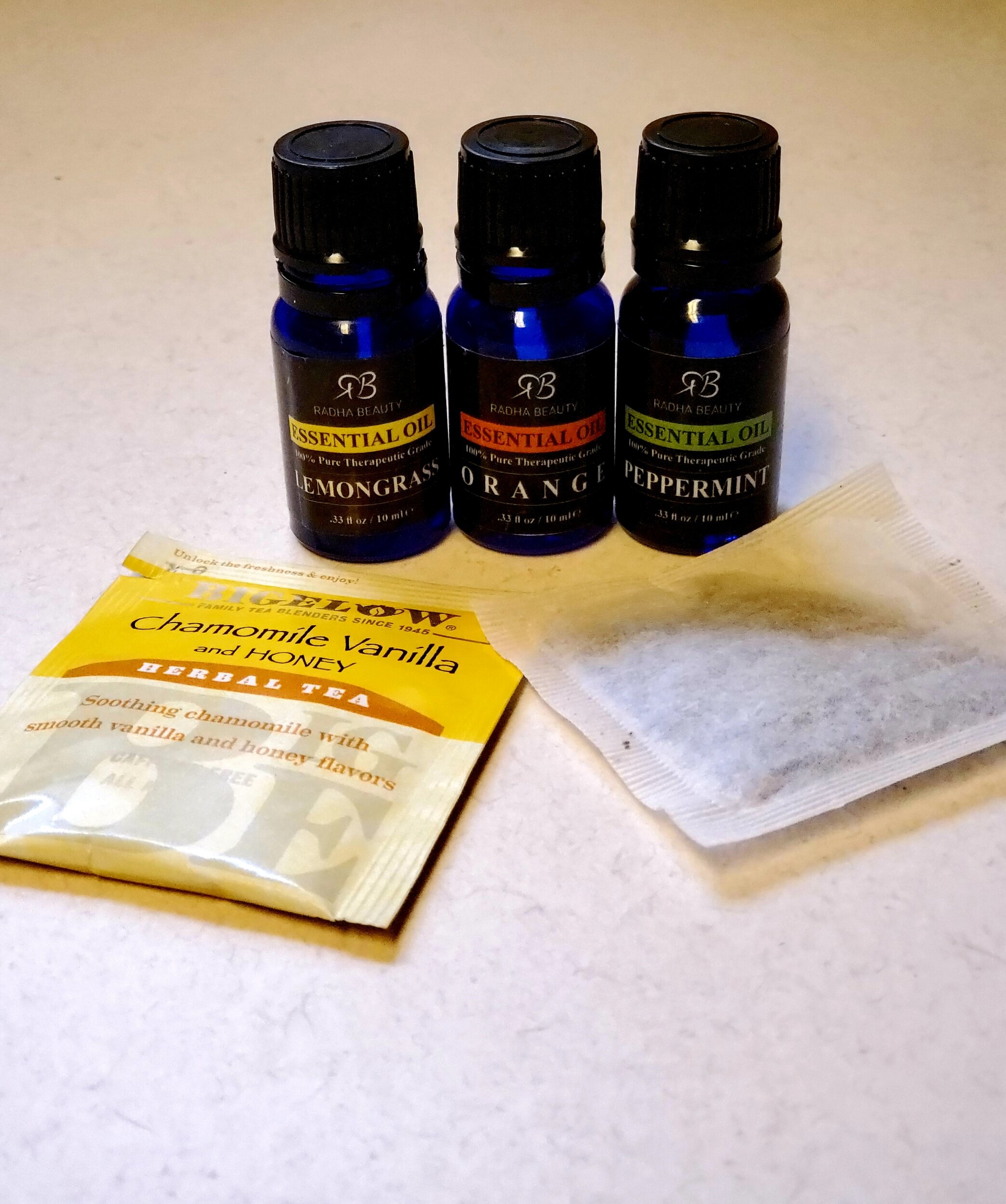
As you should know by now from reading our last few blogs, mint is a powerful herb. It is a must have plant for home growers. Mint has a powerful body healing fragrance that can be used for aromatherapy. It is important that we are constantly breathing in herbal fragrances. The aroma of mints (peppermint, chocolate mint, spearmint, and sweet mint) is said to help reduce or relieve nausea. Actually, in a few studies done, peppermint aromatherapy reduced nausea significantly, actually it reduced nausea in 57% of cases. Other essential oils such as citrus oils (lemon, grapefruit, etc.) are also great for relieving nausea.

processed_20191218_123720.jpg

2.      Herbal Tea

Herbal teas are great to use to help relieve nausea. There are some herbal teas I would personally recommend based on the teas my wife has used throughout her pregnancies, and the teas I have used to help relieve my nausea. Remember, if you are pregnant, the aromas you can withstand varies. One day, citrus may make you want to vomit, then will make you smile the next week. It’s important to have a variety of herbal teas for that reason.

Herbal teas that are great for relieving nausea:

1.      Ginger Tea

2.      Peppermint Tea

3.      Honey Vanilla Chamomile

4.      Lemon Lavender Tea

5.      Licorice Root Tea

3.      Vegetable Soup

Vegetable soup helps a lot in the relieving nausea department. Why? Because vegetable broth is packed with nutrients. When making vegetable soup, skip the noodles. Let’s go with vegetables and vegetable broth. It is important to put mint, ginger, peas, carrots, lemon, and fresh rosemary in your vegetable soup to help relieve nausea.

4.      Avocado Toast

This natural remedy is more for nausea that’s due to morning sickness. The toast provides the carbohydrates your body needs, and the avocado provides the B6 your body needs. Plus, this is a delicious, light morning breakfast that will help your upset stomach, and nausea. You can use gluten free bread for your avocado toast if that is your preference.

5.      Ginger

Ginger is said to work better than medications prescribed for nausea. The properties of ginger are truly astounding, and is very effective. There is not a set amount of ginger to use to treat nausea. In some studies, participants were giving 1.5 grams of dried ginger per day. If you have been using ginger unsuccessfully, try using that amount of dried ginger to help relieve your nausea.

The Power of Healing Crystals: Personal Story

Crystals are such powerful tools to help create balance in a person’s life. Some may think it’s silly to believe that crystals can help create balance, and rid of negative energy. I, for one, am a firm believer in crystal healing. My home is full of crystals such as obsidian, quartz, rose quartz, smoky quartz, citrine, tourmaline, amethyst, onyx, tiger eye, and many more. I was not always a believer in crystal healing. It was until this past year I started connecting with crystals. I connect very strongly to energy, and I believe that the universe guides me. I can always feel when the universe is preparing me for something, so my job is to stay aligned with my purpose, and execute. I use crystals to fight off negative energy, fight off psychic attacks, and to create positive energy and abundance in my life. I will discuss in later blogs the different crystals and their purposes. Now, I want to share a story on how crystals help shift my life.

In April of 2019, I felt a huge shift coming. I knew that something big was going to happen in my life, but I had no idea what was coming. Around that that, I ran in to a website called vinayaspirit.com, which is an amazing website that offers a variety of different healing crystals. I believe in alignment. I came across their Orgone necklace, and I was drawn to that crystal without really knowing its purpose. It was said that it helps to facilitate self-healing, expansion of awareness, increased vitality, and becoming more attuned to the state of each chakra. The Orgone necklace did just that. I received the necklace around the time my Grandmother passed away. It helped me during my healing process, and increased my vitality. Orgonite also helps manifest abundance. After receiving my Orgone necklace, I got a phone call to interview for a full time professor position. I then received another phone call within the same week to interview for another full time professor position. I felt that abundance was coming my way. I spoke my intentions in to my healing crystal, and felt overwhelmingly connected to one of the professor positions. Without a doubt, before I even had my first interview, I started speaking with an agent, and had scheduled to view homes in the area during the week of my interview.

The Orgone necklace helped me create a vibration that aligned with where the universe was guiding me. I felt that the position was already mine, and I was aligned with what the universe was preparing me for. My wife and I walked through many homes, and there weren’t any homes we connected with at the time. During the process of interviewing, and looking at homes, I decided to do my astrological reading. It was very spot on with a specific date that aligned with my second interview. My astrological reading discussed how I am going through a transit period where I will receive abundance, and a lot of money. Everything seemed to be aligned in a way where I knew exactly what to prepare for. After attending my second interview in early May, my wife and I visited more homes. There was one home in particular my wife found, and once we stepped inside of that home which is our new home, we knew it was the home we wanted. The energy in the home was so strong, and we both felt connected to the home. It just so happens that the yard was filled with quartz, lava rocks, and some obsidian crystals. Again, everything aligned in a way that I knew what to do. My wife and I knew we were standing in our new home. I knew that I was going to get offered the position, so I called the other college I was supposed to interview for, and opted out. I got offered the position, and it was everything I wanted. This is my personal story on how healing crystals helped align me to my life’s purpose.

In future posts on healing crystals, I will be discussing must have crystals to help create balance.

5 Proven Ways To Boost Your Immune System

We all strive to have a strong immune system. If not, we should. Who wants their body to be protected against sickness and disease? Thought so. Your immune system is your defense system. There are many holistic practices that are used to help boost your immune system. There are what I like to call “common practices” which includes plant medicine that are easy to grow, and access. I am going to give you 5 common practices to help boost your immune system.

1.      The most common plant used to help boost your immune system is mint. You will hear me talk about mint a lot because the properties of mint are truly amazing. Mint is a great tool for boosting your immune system. Some of the nutrients you will find in mint are calcium, vitamins A and C, potassium, calcium, and iron. Not only can mint leaves help boost your immune system, they are easy to grow, and can be used in a variety of ways. I grow, and use mint daily, especially in the winter season to help boost my immune system.

processed_Essential Oil.jpg

2.      Essential oils are great to use if you want to boost your immune system. There are certain aromas I recommend you use if you want to boost your immune system. Aromatherapy is such a big thing because science proves that essential oils encourages cell growth which leads to faster healing. You can provide aromatherapy in your own home with a diffuser, and high grade essential oils. The highest grade of essential oils you can find is Doterra. There are many other brands that can be found in your local stores like Target, Walmart, or even Amazon. The three most common essential oils to use for boosting your immune system are peppermint, lavender, and rosemary. Other essential oils such as eucalyptus, grapefruit, frankincense, tea tree, and lemon are also great for boosting your immune system. Essential oils, depending on how high the grade is can be used in a diffuser, topically, and internally. Doterra essential oils can be used for all three purposes.

3.      An easy way to boost your immune system is to get more sleep. Yes, very simple right? I will say it again because I know you are not getting enough sleep. GET MORE SLEEP. Why is sleep important? Sleep is important because sleep is a way to manage the amount of stress on your body. Stress means that your body is fighting extra hard. Stress makes your body vulnerable, and guess what? Yes, you guessed it. It weakens your immune system. In a study done in 2013, it was found that 60-80% of people who visited doctors for illness had stress related components. The study can be found at this link: https://jamanetwork.com/journals/jamainternalmedicine/fullarticle/1392494

4.      One of the best ways to boost your immune system is to eat healthier. We are at number four on the list, and I’m sure you’re like wow, I didn’t know it was that easy. Taking care of your immune system can be very easy and practical. Eating foods like fruits and vegetables will definitely aid in boosting your immune system. This holds true due to all the antioxidant that are found in fruits and vegetables. Antioxidants helps fight off viruses, and keeps your body protected. I am going to name some common fruits and vegetables you can stack your refrigerator with to help boost your immune system. Oranges, cranberries, goji berries, watermelon, blueberries, spinach, kale, cabbage, and purple seeded grapes is what you should fill your refrigerator with. They are all powerhouses for boosting your immune system. The great thing about it is… They are all common fruits that are easy to have in your home garden.

5.      Drink less alcoholic beverages. Alcoholic beverages, if you did not know, makes your body vulnerable and more prone to getting sick. Yes, alcohol lowers your immune system. I still drink my alcoholic beverages, but I always have my alcoholic beverages served with mint leaves, sage leaves (which is another plant that’s amazing for boosting your immune system), and blended with fresh fruits and vegetables. I balance my alcohol with immune system boosters.

There you have it. These are 5 common ways to help boost your immune system. I like to find the most common, and practical ways to approach health. These are things you can get started on as soon as today. Enjoy!